Showing posts with label advice. Show all posts

Saturday, September 11, 2010

Etsy Success Panel


Last night I attended the Etsy Success Panel, held at the Kenmore Live Studio in Chicago.

The studio itself is fascinating, like a glass aquarium television studio all at once modern, bright, white and filled with Kenmore appliances. When I arrived the sign advertised "Be on TV!" and a live cooking demonstration from 7-9. Felted acorn pie with whipped soap frosting? Rotisserie owl in cabochon sauce? I signed in on an iPad and found Daniellexo, Etsy admin extraordinaire (formal title: Seller Education Coordinator) whom I first met in person at the 2008 Chicago Renegade Fair.
The panel was hosted by a woman from the Kenmore studio and Julie Schneider (julieincharge) of general EtsyLabs awesomeness. No cooking (though the Bleeding Heart Bakery cookies and cupcakes served after were amazing), just a good discussion about business plans, marketing, shop improvement, craft improvement, getting to where you are today and getting to where you want to be in the future.
We "studio audience" members watched a short introductory video (same as above) on the giant wall between the oven and the refrigerator, and then panelists Danny Orendorff from Renegade Craft Fair, Emily Hamma Martin from Orange Beautiful, Daniellexo, and Ali Marie from DolanGeiman spent 90 minutes talking about all things art, craft and business.
For me, the most important (and least-discussed everywhere else) points were:
  • Have a business plan. Set tiered goals. Where do you want to be in 6 months? a year? 5 years? For the millions of things you want to do, from buying a better camera to setting up your own website to having your own brick-and-mortar shop, give yourself priorities and a time-line. If five major retailers aren't carrying your product in exactly three years, that's ok, but set those benchmarks to give yourself direction and incentive.
  • Keep track of customers. They bought from you in the past, they are more likely than the average shmoe to buy from you again. Make nice and stay in contact with short, interesting, regular newsletters. Reward them for returning and they just might.
  • Market to bloggers. Not just any bloggers, bloggers with good readership that is likely to want your product. Send the blog's author a personal email, make sure you've actually read the blog, and try to ask for something specific like to take part in a giveaway.
  • Stay aware of trends. Be yourself, but stay fresh.
After the panel was the meet-and-greet. I shmoozed with other indie sellers including Caitlin M. Peters of Wanderlustings and Mitsu Gee of Brown Sparrow's Nest, and the other two fabulous Etsy admins who were there, julietgo and ThisIsMark. I also ate too many cupcakes.

Tomorrow: Shopping Renegade! The weather is supposed to be decent.
When I woke up this morning to cold and rainy, I felt bad for the people selling at Renegade. At least it's better than...what year was it?..when the wind and the rain came in sideways and everybody's stuff got knocked over and ruined and foot traffic was abysmal.


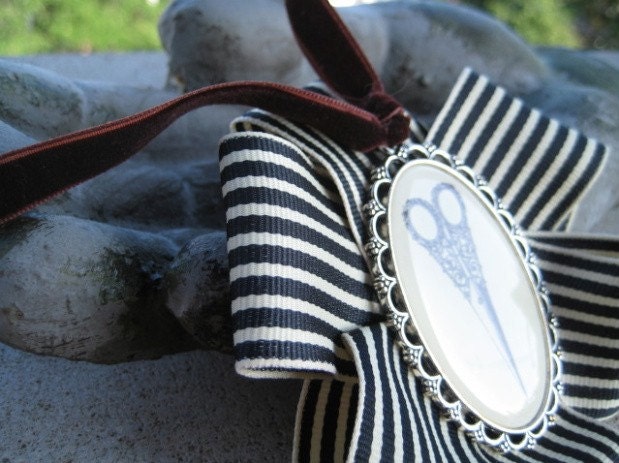
Art: "lida" pendant by Wanderlustings, photo by Cari Ann Wayman
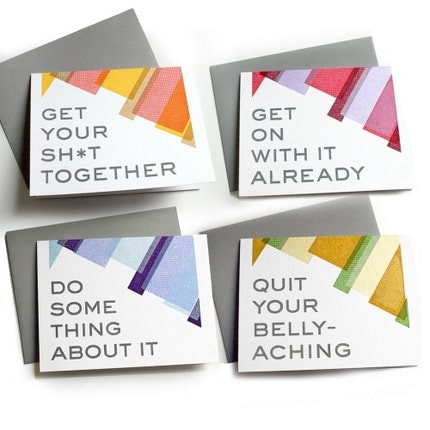
Motivate Notecards by Orange Beautiful

Thursday, June 3, 2010

Find out where they found you

Where did your customers find you?
Or any other single survey question (with very short answers) when your customers check out of PayPal.
Plus gift-wrapping options on the same screen! No more having to create against-the-rules "gift-wrap upgrade" Etsy listings.

It's all right here:
SassyBelle's Spotlight on Handmade Spark

Monday, May 17, 2010

Craftopolis: A Treasure Unto Itself

If you use Etsy and don't already know about it,
http://www.craftopolis.com
It tracks views, hearts, (my favorite) if and where you appear in treasuries, and when the time-dependent treasuries will "open" for new creations.
Some of us remember scrolling through each page of the treasury list, just hoping to see a star. Treasury creators weren't allowed to convo treasury includees to let them know they'd been featured. The forums were filled with debates on whether or not it should be considered spam and people posting "Have you seen me??? My item suddenly has a ton of views! Was it on the Front Page or in a blog or something?"
You know, waaaay back in 2008, when Bush was still president and you actually knew what that thing was at the back of your freezer.Well, now I pop into Craftopolis and check the treasure hunt with my shop names and voila! Treasuries featuring me, not hunting required!The original treasuries had a finite list to check, but Treasury East can go on forever and there's no easy way to see if you're featured unless the creator tells you. For the new Treasury East searching feature on Craftopolis, you have to have Google Analytics installed and at least one person has to have clicked on your item in the treasury, but hey, it's better than nothing. (Full disclosure: I'm a Treasury East fiend. Love it. Very useful as wish/idea/giftlist, and without the time pressure and gambling I can do way more creatively.)
So here's some of my current stardom. What's yours?

Friday, May 14, 2010

Good (Price) Point

How often do I give kudos to someone else's philosophy on pricing?

Go mark your calendar (and I'm following this with a post of the greatest calendar ever invented), because The Crafts Report has good advice.
Four Reasons to Increase the Price Points of Your Craft

Thursday, April 1, 2010

Econ 203: Everything Isn't About You, OK?

After a very good Etsy virtual lab panel with the women behind The Handmade Marketplace, I'm back in pricing-rant mode. This time I'm making it as simple as possible. Selling vintage things that don't contain a piece of my soul probably helps remind me of the whole capitalist system thing.

An item is "worth" (and I'm using the financial definition of worth) the amount of money a person is willing to pay for it and the current owner is willing to part with it at a given point in time.

Stranded on a dessert island, fresh water is worth more than diamonds (unless you know how to turn the diamonds into a precision cutting tool and do something Gilligan's Island/Macgyver style).

A soda at the movie theater costs hardly anything to produce, but because people are willing to pay $4, the theater can and does charge $4.

Whatever you sell, it's good to know your real costs so you know if it's worth it to keep doing and making and selling.

Finding the person who will pay more for the thing you have may take time and energy. Is your time and energy worth the extra money? Is the thing you are doing/making in the first place worth your compensation for doing/making it?

All sorts of other things probably factor into your idea of worth. With Etsy, we're doing what we love. Hobby and job blur. That's ok. We're human.

But so are our buyers. And as humans, they will pay whatever the item is worth to them. They will pay for the story, pay for the way it reminds them of their childhood, pay for whatever reason the item is worth something to them. If a vintage seller finds a $1 cup, but it's the exact cup someone drank from while they watched the Bears win the Super Bowl with their grandfather right before he died, that buyer will gladly pay more than $1.

So think like a buyer. Find your buyers. Find out more about the people who already bought your items. Find out more about the people who look at your items. Stalk your audience. Whatever you have to and are willing to do.

So long as it's worth it.

Sunday, March 15, 2009

Hard Times: the economy and some quick suggestions

Yes, the economy is crap. We know. And while it's very cathartic to throw poop at the probable causes of our current meltdown, from a big picture pretend-you're-not-part-of-it-for-a-second standpoint, we were way overdue. "New economy" my ass. We were riding a huge bubble and it was awesome and then it burst and holy crap it hurts now that it burst, but while we try to eat our shoes for dinner, let's be realistic about our situation and make what we can out of what we have. That's what crafters and DIYers do, after all, no?

So!

Luxury is out except in very small quantities. If you make $500,000 chandeliers, you might want to work on switching your product line. Think like your buyers: when times are tough, the first things you stop buying are the things that you least "need."

Suggestion of the day, which I am giving away, free of charge:
Be a need!

To be a need, it helps to start off as a more practical product. Soap, children's clothing, dog collars, and chairs are all fairly easy to justify purchasing even when times are hard. But a little creativity can go a long way for making all sorts of things seem necessary; just think of how many people can't live without their daily lattes or Blackberries or personal trainers. Art can be a need because you need to fill that spot on the wall that you just can't fill with anything you currently own and it's turned into a hole in your life that eats away at you every time you look at it. (85% of my apartment is a spot on the wall that needs art, but I'm buying a condo soon and then it'll be a nice lifelong process filling it up! But I know many many people have that nagging wall space.) And if you're flexible about what you're making, try looking for a version of what you do that is considered more "necessary." If you work in glass or ceramics, try more practical but artfully minded cups and bowls and dishes and things instead of huge ornamental vases. You get the idea.
I'm pushing the business card sized envelopes because it's more important than ever that your particular business card get noticed instead of lost in the shuffle! I just started handing them out to Realtors because Realtors need them because the envelopes are wallpaper and that goes along with the whole buying and selling houses thing. Anybody in the handmade/crafting/arts world needs them becaues they are recycled/handmade and give your business card a memorable, beautiful and artistic presentation that won't soon be lost. Need need need need need!

In cases where the economic downturn means people are more likely to buy from Wal-Mart because handmade is pricey, you've got to market the message hard that handmade lasts and is higher quality so it's actually a better value. If shoppers are on Etsy and cruising handmade universe they already kind of know it, so drive that home right into their shopping carts. You need my product and you need to buy handmade.

I have more things poking about my brain, but that's enough for today.


POST SCRIPT: I started a "Be a NEED: why is your product a NEED?" thread on the Etsy forums as a sort of marketing exercise and people are writing in all kinds of fabulous creative stuff. Feel free to join in the conversation there or post your response in the comments.

Thursday, October 23, 2008

Good Advice for Sober Babies

Running your own business is a lot like having a baby. Everybody has all this advice for you and all of it is well-intended and much of it is "good advice," but there are so many things that are so personal and so personalized that you have to weed through what seems like a common, universal experience (and other people want to tell you their experience will be your experience) and find what applies to you, what works for you, and what doesn't. Meanwhile, you have to be careful not to be an ostrich with its head in the sand for things that truly are universal and not write things and people off as "oh, that just doesn't apply to me" when they actually do. And all this information and research still can't keep you from walking into tons of problems that you have to learn the hard way for yourself, and other things you'll just never learn. On the plus side, when you screw up your business you're mostly just hurting yourself, whereas if you feed your baby vodka and ping-pong balls, you may also harm the baby.

Now if I can only reach that beautiful internal point where I can say, "This is what I'm hearing from other people, this is what I've learned, this is what I'm doing. That's that, and I'm ok with that."

Maybe that'll be my new attempted mantra: "That's that and I'm ok with that." You should try. it. It'll be good for business.

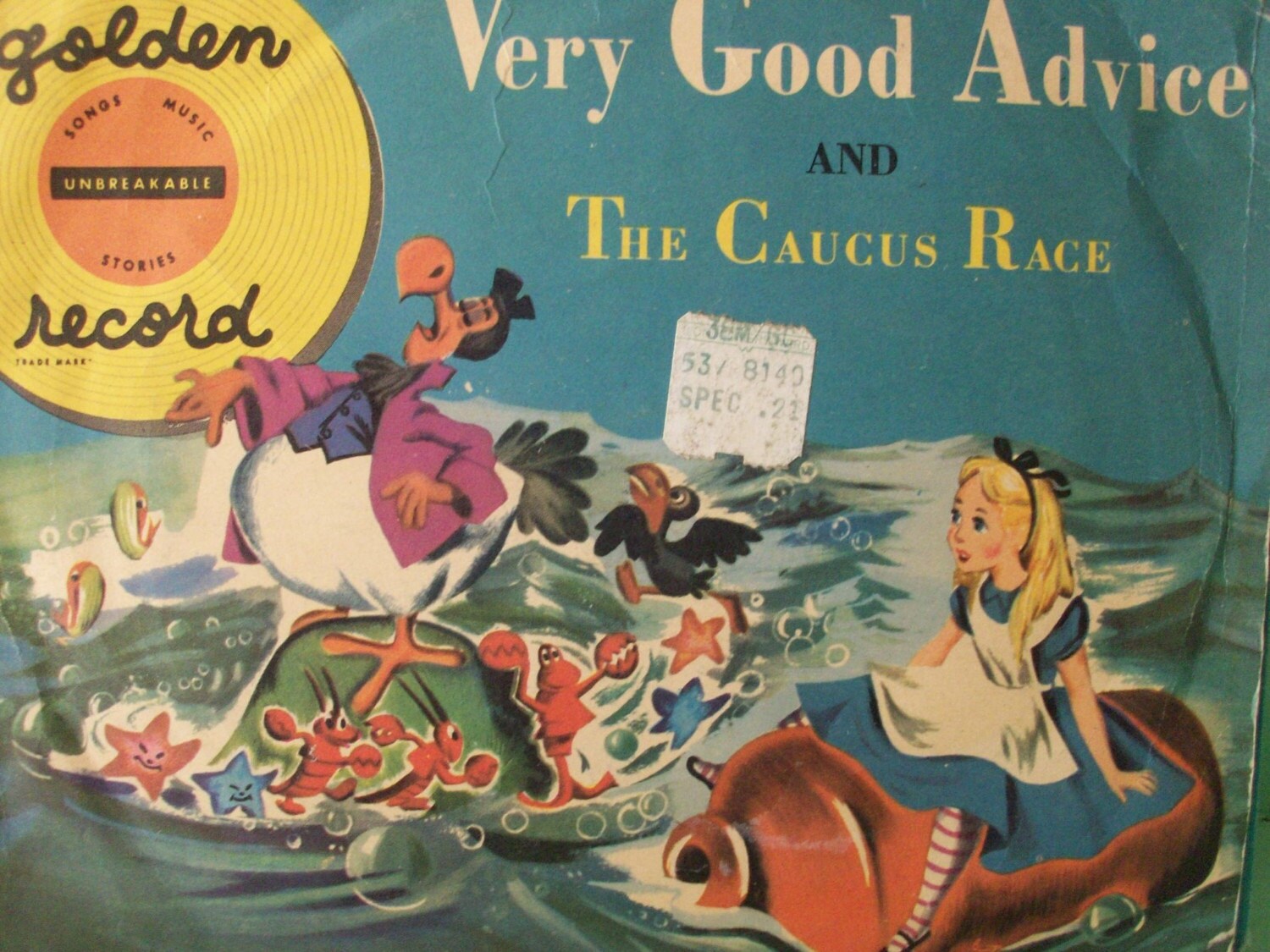
*Alice in Wonderland "Very Good Advice" record available from ricracandbuttons's Etsy shop

Thursday, September 4, 2008

Swimming in the Data Pool

Ok, it's mini-pricing lesson time, but this one will be very mini and very simple, to be expanded later possibly by request and/or payment, as I'm looking for ways to make more money and I see how much the few people selling spreadsheets are making on Etsy and I think that I need to start tapping that market, too, but in the places it's clearly not even being tapped.

Mini-lesson of the day:
Pool your data.

This goes well as a pun with my one-of-a-kind hand-sewn fish swimsuit seller, so let's go back to her. It turns out, she's not the only one on Etsy selling fish swimsuits. Of course, no one else's fish swimsuits are exactly like her fish swimsuits, but there's a school of sellers around and they've even started a team called Team Swimmy Suit. They want to pool their data because some girl with a blog told them that was a good idea, but they don't know what this means or how to do it.

Here's how to do it.

Make a spreadsheet. Google Docs is wonderful for this because you can create a single online spreadsheet that everybody is allowed to edit, either by invitation only or by making it open access.
On that spreadsheet, you want to make places to enter the date the item sold, the price for which the item sold (how you want to deal with shipping is up to you, but I like to give it its own column), and the very general type of item. (Oh, dear lord, she made an example!) For fish bathing suits, the team might decide to split it up into small, medium, and large with columns for one-piece versus two-piece and extra places to check-off special characteristics that might effect the price, like custom, recycled, or jewel-encrusted. (Team SwimmySuit example. No, I really didn't have time for this.)

Then, you want as many people as possible to fill in as many sales as possible. The more data you have, the better your pricing info will be. Lucky for everybody, it doesn't matter if you haven't been keeping track of your sales thus far, since Etsy does it for you on your sold orders page. In theory, everything you need to fill out a spreadsheet should be there: date sold, price (with shipping separate), and what the thing was.

When you have a lot of data, it's time to analyze. It's up to you what constitutes a lot...How frequently do these items sell and how many people sell them and how wide is the range of what's out there? Fish bathing suits may be less common than felted boogers may be less common than beaded earrings. You know your craft. Just keep collecting data after you've started analyzing, too.
Hopefully, someone on your team has taken stats 101. If not, find out if someone on your team is sleeping with someone who has taken stats 101, or is the parent of someone who has taken stats 101. If that, too fails, pay someone like me to do it.

The easiest and most useful stuff for you to learn from the little exercise is how many fish swimsuits sold over time for each price range. That's the info you can then use to decide where to price your own items at the real true "bestish" pricing point, or at least the closest thing you're ever going to get to it.
You'll also want to pull out of your data pool analysis whether or not your extra column check boxes had any effect on the price. There's shmancy stats things you can do involving "r squared" and other crap, or you can just tell the spreadsheet software to do certain things if a column has a certain answer in it and see if the final totals change (which is why I no longer remember any formulas I learned in stats or econometrics).
A good stats-knowing person will look at the data in a whole bunch of different ways and see what sorts of other useful things pop out, too. Holiday trends, time trends, if a certain user's items always sell for significantly more or less than other people's and taking them out makes the rest of the numbers make more sense, etc. I'm too ADDesque to do this crap all the time, but I do find it interesting in short spurts.

In the end, even with all this wonderful information, your pricing will still be up to you. It will never be perfect and will more likely be a range than a number, plus people may hold onto "people pay more for recycled fish swimsuits" like a superstition even if the data proves otherwise. But if you make something even vaguely homogeneous with a team, jump into the pool. It can't hurt.

Thursday, August 28, 2008

Wednesday Night Critiques

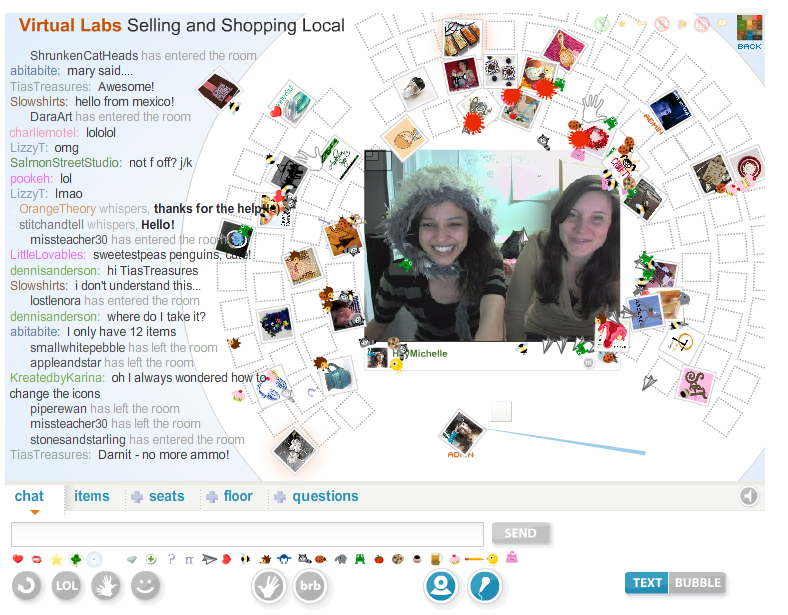
For those of you in Etsyland, I highly recommend going to HeyMichelle's Wednesday night critiques in the virtual labs. I've mentioned them in here before, but not really discussed them directly.
The virtual lab is like a chat room with shmancy features. Etsy's article about them for more information is here, or you can just go in and play around when they're empty (my preferred method of figuring things out in general).

On Wednesday nights, Etsy admin and generally cheery charming (but not icky-sweet annoying) person HeyMichelle signs onto her webcam from her Brooklyn apartment and basically talks for three hours without breathing. Sometimes she takes a long list of shops to critique (anybody who is there at the starting time and asks to be critiqued and/or convoed her in advance), sometimes she picks just a few that she thinks will be a good mix and have information to help a wide audience. Sometimes she chooses a general theme for the critique night (we did a whole night on photography once) and then we'll discuss bits and examples from shops in the room and anything people can think of as a great example of whatever we're talking about from random other Etsy shops.

When a specific shop gets critiqued, Michelle will go through and comment on whatever catches her attention, but the shop owner can ask specific questions, and everybody else in the labs will also comment on things they notice about the shop. The biggies tend to be banner/avatar, photos, tags, announcements, descriptions, prices/shipping, but all sorts of other things may be discussed, particularly if a shop's are glaringly good or bad. For the most part, people aren't mean about things, but if something needs work you are likely to hear about it. Michelle is particularly artful at addressing issues without sounding insulting. I'm much more inclined to say things like "Why would anybody buy a banner from a shop with a blurry banner?" and "Jewelry looks stupid with random-ass props." Occasionally you'll get people who are even meaner and/or more direct than that, but for the most part, it's constructive instead of useless and effusive like many a forum or friend critique.

In all my many weeks of showing up, I've only been critiqued twice myself. I wasn't avoiding the hot seat on purpose, as my first few weeks I tried to get on the critique list but wasn't chosen, but I stayed and listened anyway. Honestly, this was for the best and I think everybody should be required to sit through at least one night's worth of critiques before having her shop looked at, because I learned so much by hearing other shops get critiqued. My photos have gotten a gazillion times better not through my own critique but by looking critically at other shops and hearing advice on ways other people could improve their pictures and applying them to my own work. And that's what Wednesdays are amazing for: you can listen to and participate in talking about everybody else, and at the end of the night, you find yourself making changes in your own shop and drasticly improving all around. At least, that's what I do.

My best advice? Show up and shut up for at least an hour. You'll need a decently fast connection and sound, and the ability to apply things said about others to yourself. But if you can manage those things (and consciousness after 9 PM EST on a Wednesday night), you're in for a treat.

Fin.

*NOTE: Photo from Etsy Labs' Flikr of some other virtual lab thing, but gives you an idea since I didn't take a screen shot.

Wednesday, April 23, 2008

Econ 101: Jill gets sick of dumb pricing advice

I am not a brilliant pricer. I haven't mastered magic numbers for my shop. I haven't spent enough time researching it, but I have the advantage of knowing the economic theory behind it. It has nothing to do with the cost of my time and supplies multiplied by a magic number. In fact, for products I've already made, those things should barely come into account.

WHAT?

Yes. Revolutionary. And a little bit counter-intuitive.

Maybe you never took Econ 101. Maybe it made no sense. Maybe you hated it. But you've heard of "supply and demand." The part of supply and demand we care about right now is that a buyer will want to spend less money and you want to make more money.
Now let's do an imaginary Etsy example.
Let's say you make one-of-a-kind hand-sewn fish swimsuits. Even if they are free, some buyers still won't want them because they don't have fish, or their fish can't wear Lycra, or they just don't like your particular style. Fine.
Let's say this month you made 25 fish swimsuits. If you keep lowering your prices and your fish swimsuits are still not selling, you're probably at the point where all the people who have found your shop and would actually want to buy your fish swimsuits at any price have already made their purchases. Go advertise, fix your photos, change your product line, etc. Lowering your prices more probably won't help. After all, you aren't the only fish swimsuit seller and there is a limited total number of people who need handmade fish swimsuits in their lives.
But what if those 25 suits flew off the shelves at $1 a piece? Then you made $25. Swell.
The next month you again make 25 fish swimsuits. You want to see how much you can possibly charge, so you start with your price at $1,000 a suit and lower it until you get a sale (NOTE: this is not something I'm advising you do, since it's not like Etsy or your personal site has the traffic to make this really work, though it might be fun to try on one item just to see). Your sale finally comes in at $250. Holy crap! Someone paid $250 for a fish swimsuit! You rule!
So you should start charging $250 for your fish swimsuits and list one a day.
NO. WRONG. BAD.
Because let's say you lowered it to $200, maybe you'd sell two a month (that's $400 total per month, FYI). And what if you lowered it to $100? Holy crap, you just sold 10 of them! that's $1000 a month! $75? 20 of them, giving you $1,500!
"Ok, so then I want to lower my price until everything sells."
NO. WRONG. BAD AGAIN.
Because now let's say in order to sell all 25 of them, you have to lower your price to $50, and that gives you $1,250. When you were charging $75, you only sold 20 of your 25 sweaters, but you made $1,500. That's an extra $250. $250 buys a lot of really cute felted crap from other Etsy sellers.

"So, wait. The best price to charge is some arbitrary-seeming number that probably doesn't sell all the stuff in my shop but also isn't the the most people are willing to pay and has nothing to do with how much it cost me to make it?"
YES. If it's already made and it's not doing you any good to hold onto it. Because once you've made it, all of those "how much it cost me, how much time it took, etc" things become what the econ world officially calls fixed costs or sunk costs. They don't change if you get $1 or $10,000 for the item. As a person who handmakes things myself, I understand the sentimental attachment involved, but I use that as a sort of base worth it has to me, so no matter what I'm not willing to part with it for less than that amount.

More on fixed costs: if I spend twice the time making a card because I did the whole thing with my left hand because I thought it would be more artistic and force me to be more mindful of my creation if I made the card lefty, and it comes out looking almost the same but a little worse than the card I made immediately before it with my right hand, a buyer is not going to pay me twice as much for the one lefty card to cover the two righty cards I could have made in that same amount of time.
"But it took me twice as long!"
Yes, please, whine like that to the buyers, too. If you're doing processes that take double the time and really sinking your teeth into the integrity (note: this is different from the actual product quality, which would lead to repeat customers. I'm talking about things that aren't visible in the final product, like the fight I had with my printer because it's my grandpa's old printer but I'm loathe to get rid of it because part of me thinks he haunts it except not really) then you need to be doing it for the integrity and not expect your buyers to pay you more, too.

"How the fuck do I find this arbitrary-seeming perfect pricing number?"
How do I get a flat stomach by June? Sorry I don't have a quick-fix. Unfortunately, you need data. And even all the data in the world won't get you a perfect solution, because even if you had an entire year's worth of data, there are all sorts of other things that come into play (maybe a major movie comes out one month in which Brad Pitt makes out with a fish wearing a fish swimsuit that's totally like the kind you make! Or maybe you finally re-do all your pictures and your sales jump up) and how are you supposed to know how much that changed things? And this is all assuming you have a fairly homogeneous (most of your crap is similar) product line. How the hell do you price that one random item? Yeah, good luck with that. But as a start, try playing around with your pricing in an orderly fashion. See how many items you've been selling and your total income week by week or month by month for the lasts year or six months or however long you've been on Etsy. Now try raising your prices a bit at a time week by week and see what it does to your income. If it goes up, keep going up. If it goes down, try lowering. See if you sell more. If not, don't keep lowering. It's like that lemonade stand computer game (less than 20 years ago I played it on an Apple IIe with no graphics...I'm too young to feel this old...) only your shop is your lemonade stand. You can play a free version online here.

What would be really nice is if sellers got together and could share data, or if Etsy could release some data to sellers. Maybe I'll ask my Aquatic Animal Lycra Team (AALT) to start sharing data on Google Docs or something so we can all have a better idea about pricing, but that might be considered price-fixing and might be a little illegal. Still, if just a few of us pooled resources, how is that any different from standard market research? Clearly, I need a marketing department. Where's my dog? He could totally do it.*

Ok, deep breath.

Now, let's say you make felted boogers. Hundreds of them. You frequently make them to order, and you can easily make more or less depending on what people want and seem to be buying. You are the seller who needs to worry about the time it takes to make each item and your materials costs and things. You are much more complicated. I'm too tired to deal with you right now, but if you're lucky, I might try to figure out a way to make the theoretical crap actually practical and useful another day.

But the more immediate reason I bring you up, oh maker of felted boogers, is that it will be obvious to you that if you are at the point where all the people who know about your shop and want your felted boogers have already purchased them, you stop making them until the demand returns. You work on your advertising and your photos, or maybe you stalk Alchemy and notice a lot of requests for resin boogers and try going into the resin booger business as a supplement or instead. And this is obvious to you because you weren't covering your variable costs. Those are the things that change with the selling of each item, and since you make each item to sell each item, materials and time kind of creep in there for you. They create a bit of a pricing floor, below which it's not worth it to you to be felting boogers.
What do I mean by a FLOOR?
A level below which it is no longer worth it to you to sell your crap.

So when we go back to our friend, the fish swimsuit maker, if she's not moving her stock of 25 swimsuits, she'd better not be making any more, either. That would be dumb. When people talk about pricing things and say that they "can't charge enough to cover their materials and pay themselves a decent wage," I know this is an asshole response, but THEN DON'T MAKE IT ANYMORE! If you're doing it because you love the art, then you're going to have to consider love part of your salary. It goes in the bag with integrity. If you're trying to make a living, go play Lemonade Stand, keep track of your weekly and/or monthly sales, stalk people who sell similar items and their sales, and if you're still in the red, your magic highest number may still be red! Hopefully, it will be huge and gorgeous and positive and you can quit your day job and buy all 25 fish swimsuits. I hear that shop is having a clearance sale.


*This is assuming "Market research" involves barking at other dogs and pawing my face at 4 AM